
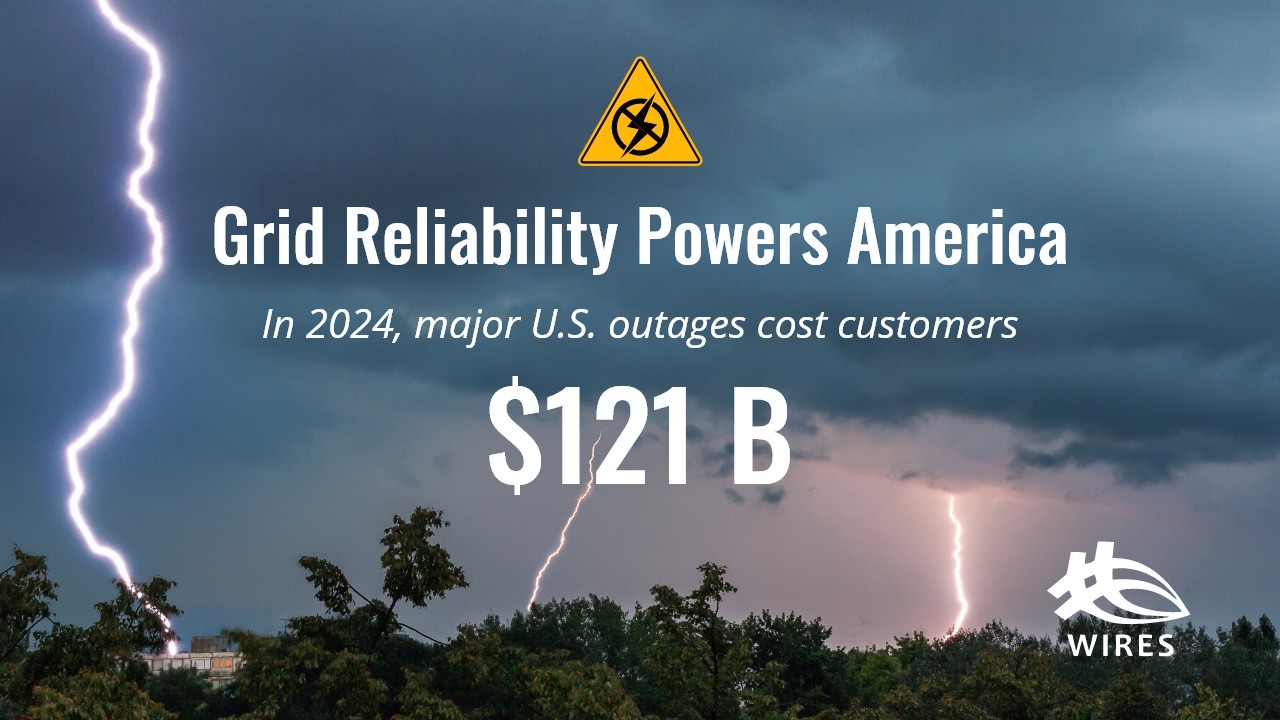
Watch the narrated one-pager.
Summary: Grid reliability does more than keep the lights on: it protects customers, powers economic growth, and strengthens national security. A strong, resilient transmission system gives operators multiple paths to share power, so local disruptions don’t become costly, widespread outages. Timely investment in transmission infrastructure helps to improve reliability, reduce outage impacts, and support growing electricity demand. Waiting until reliability needs become urgent is rarely the least-cost approach.
The Value of Grid Reliability
- Grid reliability is the power system’s ability to deliver uninterrupted electricity service to customers.
- When disruptions occur, a strong, resilient transmission system provides more than one path for moving power. Operators can share power across a wider area, access diverse resources, reroute around outages, support rapid recovery, and instill customer trust.
- Reliability does more than keep the lights on – it protects customers, powers economic growth, and strengthens national security.
Reliability Protects Customers and the Economy
In 2024, major U.S. outages cost customers
~$121 billion1
- Major technology and industrial manufacturing companies are growing across the U.S.
- Power interruptions halt manufacturing, delay shipments, idle workers, and disrupt healthcare and public services, causing billions of dollars in annual economic losses.
- The cheapest outage is the one prevented. Proactive grid investment often costs less than storm recovery, emergency repairs, and the economic damage.
- Waiting until reliability needs become urgent is rarely the least-cost approach.
- For each year essential, large-scale transmission is delayed, it costs customers between $150 - $370 million in annual lost net benefits.2
Reliability Matters Most When the Grid is Under Stress
- Reliability is most valuable during extreme weather and periods of high system stress, when redundancy helps utilities minimize disruptions and maintain continuous service.
- A highly interconnected grid offers multiple delivery paths, preventing local disruptions from becoming widespread outages.
- Nearly half of a transmission line’s annual value may be realized during high stress events; although such events occur only 10% of the year, those times are when the stakes are highest.3
How WIRES Members Support Reliability
- WIRES members are developing local, regional, and interregional transmission projects to address future system needs and strengthen reliability in the face of extreme weather, cyberattacks, and growing electricity demand.
- WIRES members are deploying advanced technologies – such as drones, advanced sensors, digital twins, and other analytics tools – to optimize existing infrastructure, improve visibility into system conditions, and identify potential reliability risks before they become outages.
Reliable service depends on sustained investment, which requires regulatory certainty. Ultimately, customers benefit when regulators provide a predictable path for prudent investment.
Download a PDF of the one pager: Grid Reliability Powers America [PDF, 108.92 KB]
Sources:
- 9/1/26 – Oak Ridge National Lab – Analysis Shows Power Outages Cost US Electricity Customers Billions. https://www.ornl.gov/news/analysis-shows-power-outages-cost-us-electricity-customers-billions ↩︎
- 11/12/25 – Grid Strategies – Delaying Transmission Increases Costs and Reduces Benefits for Consumers. https://wiresgroup.com/delaying-transmission-increases-costs-and-reduces-benefits-for-consumers/ ↩︎
- 7/8/26 – DOE National Transmission Needs Study – Draft, https://www.energy.gov/oe/articles/does-office-electricity-publishes-2026-draft-national-transmission-needs-study ↩︎